
When you start researching quick home sale options, you will likely encounter both cash buyers and wholesalers, often described in ways that make them sound interchangeable.
Understanding the real difference between a cash buyer and a wholesaler is essential before signing any agreement, since these two approaches work very differently behind the scenes.
Knowing what you are actually dealing with can protect you from unnecessary delays or complications.
This guide explains how a genuine cash home buyer Indiana sellers work with differs from a real estate wholesaler Indiana investors sometimes operate as, and what this distinction means for your experience when you sell a house for cash in Indiana properties.
What Is a Cash Home Buyer?
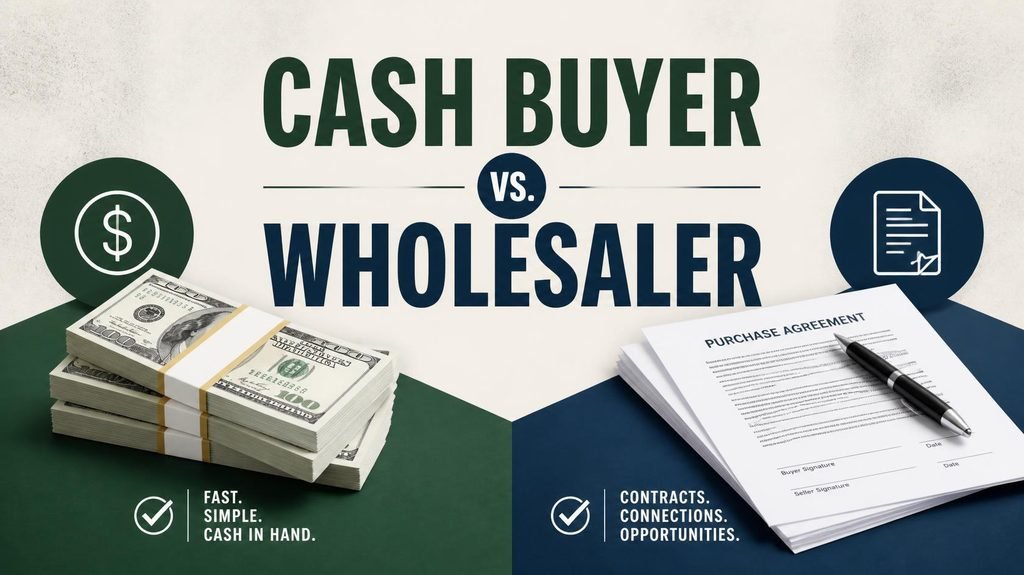
A cash home buyer is an individual or company that purchases your property directly, using their own funds, with the clear intention of owning the property once the transaction closes.
This means they are the actual end buyer in the transaction.
When you work with a genuine cash buyer, the offer you receive reflects what that specific company or investor is willing to pay based on their own evaluation of the property’s condition, location, and market value.
Cash buyers typically have proof of funds readily available, since they aren’t relying on financing or trying to line up another buyer before completing the purchase.
Once you accept an offer from a legitimate cash buyer, the path to closing is generally straightforward, since no additional buyer needs to be found or convinced before the transaction can close.
What Is a Real Estate Wholesaler?
A real estate wholesaler operates quite differently, essentially functioning as a middleman who secures a property under contract at one price and intends to assign or resell that contract to a different end buyer at a higher price.
Wholesalers typically do not intend to actually purchase and own your property themselves. Instead, they aim to profit from the difference between the price they negotiate with you and the higher price they charge an investor who ultimately closes on the home.
This means when you sign an agreement with a wholesaler, you are not necessarily selling to the person you are actually talking with.
Instead, you enter a contract the wholesaler hopes to assign to someone else entirely.
Because wholesalers depend on finding a separate buyer before the deal can close, this adds uncertainty to your timeline that typically doesn’t exist when working directly with a cash buyer.
Key Differences Between the Two Approaches
Understanding the practical differences between these two business models helps clarify what you can realistically expect throughout your specific transaction.
Who Actually Buys the Property
A cash buyer intends to purchase and own the property, while a wholesaler intends to assign the contract to a different investor who becomes the end buyer.
Certainty of Closing
Cash buyers generally provide more certainty because they don’t depend on finding another party to complete the purchase, while wholesalers can fall through if they fail to secure an end buyer.
Transparency About Intentions
Reputable cash buyers are typically upfront about purchasing the property directly, while some wholesalers may not clearly disclose their intention to assign the contract elsewhere.
Contract Terms and Assignability
Wholesaler contracts often include assignment clauses that allow the contract to be transferred to another party, a detail worth watching carefully when reviewing any purchase agreement.
Pricing Structure
Wholesalers need to negotiate a low enough price from you to leave room for their assignment fee, which can sometimes result in a lower offer than you might receive from a direct cash buyer.
Why This Distinction Matters for Sellers
Knowing whether you are dealing with a genuine cash buyer or a wholesaler significantly affects your expectations for timeline, certainty, and the final price you receive for your property.
If a wholesaler cannot find an end buyer willing to accept the assigned contract at their desired price, the deal can fall apart entirely, potentially leaving you back at square one after believing your sale was already progressing toward closing.
This uncertainty can be especially problematic for sellers working against a specific deadline, such as a job relocation, financial hardship, or another time-sensitive circumstance requiring a reliable, predictable closing date.
Additionally, since wholesalers need room to profit from their assignment fee, their initial offers sometimes reflect a lower price than what a direct cash buyer might offer for the same property in similar condition.

How to Identify a Genuine Cash Buyer
Knowing what questions to ask can help you determine whether you are working with an actual cash home buyer Indiana sellers can rely on, or a wholesaler operating under a similar-sounding business model.
Ask directly whether the company or individual intends to personally purchase and close on the property, or whether they plan to assign the contract to another buyer before the transaction completes.
Request proof of funds showing the buyer’s ability to close on the property, since legitimate cash buyers should be able to provide this documentation without hesitation or excessive delay.
Review any purchase agreement carefully for assignment clauses, which typically indicate the buyer may transfer their rights and obligations under the contract to a different party before closing occurs.
Ask about the company’s typical closing timeline and process, since genuine cash buyers usually provide clear, consistent answers based on their direct experience purchasing properties themselves.
Are Wholesalers Always a Bad Choice?
Wholesaling is a legal, legitimate real estate investing practice, and not every wholesaler operates dishonestly or creates problems for sellers.
Some wholesalers are transparent about their business model from the very first conversation, clearly explaining that they intend to assign the contract while still providing a fair timeline and reasonable expectations throughout the process.
The concern typically arises when a wholesaler is not upfront about their intentions, leaving sellers confused about why closing is delayed or why an unfamiliar party suddenly appears at the closing table instead of the person they originally negotiated with.
Understanding this distinction helps you decide whether to work with a transparent wholesaler who clearly explains their process or to work directly with a cash buyer.
The Process of Selling to a Direct Cash Buyer
Understanding how a straightforward transaction with a cash buyer typically unfolds can help you spot the difference when comparing your options.
Initial Contact and Property Details
The process begins with providing basic information about your property, including its condition, location, and your timeline for selling.
Property Assessment
The buyer schedules a visit or reviews photos and documentation to evaluate the property firsthand before presenting a serious offer.
Direct Cash Offer
You receive an offer directly from the buyer who intends to purchase the property themselves, without needing to secure a separate end buyer first.
Proof of Funds and Contract Review
A legitimate buyer provides proof of funds and a clear contract without assignment clauses that would allow the deal to transfer to an unknown third party.
Reliable Closing Timeline
Because the closing doesn’t depend on finding another buyer, the process typically follows a predictable, reliable timeline.

Why Choose a Direct Cash Buyer Like WeBuy219
At WeBuy219, we operate as a direct cash home buyer Indiana sellers can trust, meaning we personally purchase and close on every property we make an offer on, without relying on assigning contracts to other investors.
This approach provides significant peace of mind for sellers, since you know from the first conversation exactly who you are dealing with and that the timeline you agree on reflects our ability to close the transaction.
We believe transparency matters at every step, which is why we are always upfront about our business model and happy to answer questions about how we operate compared to other types of buyers you might encounter.
Frequently Asked Questions: Cash Buyer vs. Wholesaler
#1. What is the main difference between a cash buyer and a wholesaler?
A cash buyer intends to purchase your property personally, while a wholesaler intends to assign the purchase contract to a different investor.
#2. Can a wholesaler deal fall through after I sign a contract?
Yes, if the wholesaler cannot find an end buyer willing to accept the assigned contract, the deal can collapse before closing occurs.
#3. How can I tell if I am working with a wholesaler?
Ask directly whether the buyer intends to close personally, request proof of funds, and review the contract for any assignment clauses.
#4. Are wholesalers operating illegally?
No, wholesaling is a legal real estate practice, though transparency about intentions varies considerably between different individuals and companies.
#5. Will I get a better price from a direct cash buyer than a wholesaler?
Often yes, since wholesalers need room in the price to cover their assignment fee, though this can vary depending on the specific situation.
#6. Does WeBuy219 assign contracts to other investors?
No, WeBuy219 purchases properties directly and closes on every transaction ourselves, without assigning contracts to third parties.
#7. How quickly can I close with a direct cash buyer?
Direct cash buyers typically offer more reliable and often faster closing timelines because they don’t depend on securing a separate end buyer.
#8. How do I get started with WeBuy219?
Reach out through our website or by phone to discuss your property. We will provide a transparent, no-obligation cash offer as your direct buyer.
Moving Forward With Confidence
Understanding the difference between a cash buyer and a wholesaler empowers you to make a more informed decision when choosing how to sell your property quickly.
Asking the right questions upfront can save you from unexpected delays or complications later in the process.
If you are ready to sell a house for cash in Indiana, properties directly to a buyer who closes every transaction personally, WeBuy219 is here to help.
Contact us today to discuss your property and receive a transparent, no-obligation cash offer.