
Thinking about selling your house but dreading the thought of endless repairs and surprise costs? The idea to sell a house as-is can sound like the perfect solution, a fast, simple way to move on without the hassle.
The short answer is yes, you can. However, it’s crucial to understand that “as-is” isn’t a magic phrase that erases all liability.
It doesn’t let you hide known issues, and failing to disclose problems can lead to costly lawsuits long after the sale. This guide breaks down what ‘as-is’ truly means and how to navigate the process safely.
What “Selling As Is” Really Means for You
In real estate, selling a house “as-is” means you are clearly stating to buyers that you will not be paying for any repairs.
The buyer agrees to take on the property in its current condition, with all faults. This approach creates a clear distinction between an as-is sale and a traditional sale. Instead of back-and-forth negotiations over a leaky faucet or an old furnace, the buyer accepts responsibility for any fixes.
This understanding is often formalized with an “as-is addendum” to the sales contract. However, this is where a critical misunderstanding occurs. Selling “as-is” transfers the financial responsibility for repairs, not your legal duty to be honest. It is not a free pass to hide known problems.
The #1 Rule You Can’t Ignore: “As Is” Doesn’t Mean “As Is Secret”
You are legally obligated in most states to disclose any significant problems you know about. Hiding a known issue, called a material defect, can lead to expensive lawsuits after you’ve handed over the keys. An “as-is” clause protects you from having to fix problems, not from the liability of hiding them.
So, what counts as a material defect? Generally, it’s any issue that could make a buyer reconsider their purchase or offer a lower price. This information is formally shared on a Seller’s Disclosure form. Common examples include:
- A leaky roof or pipes
- Foundation cracks or issues
- A faulty electrical system or a non-working HVAC
- Past flooding or significant water damage
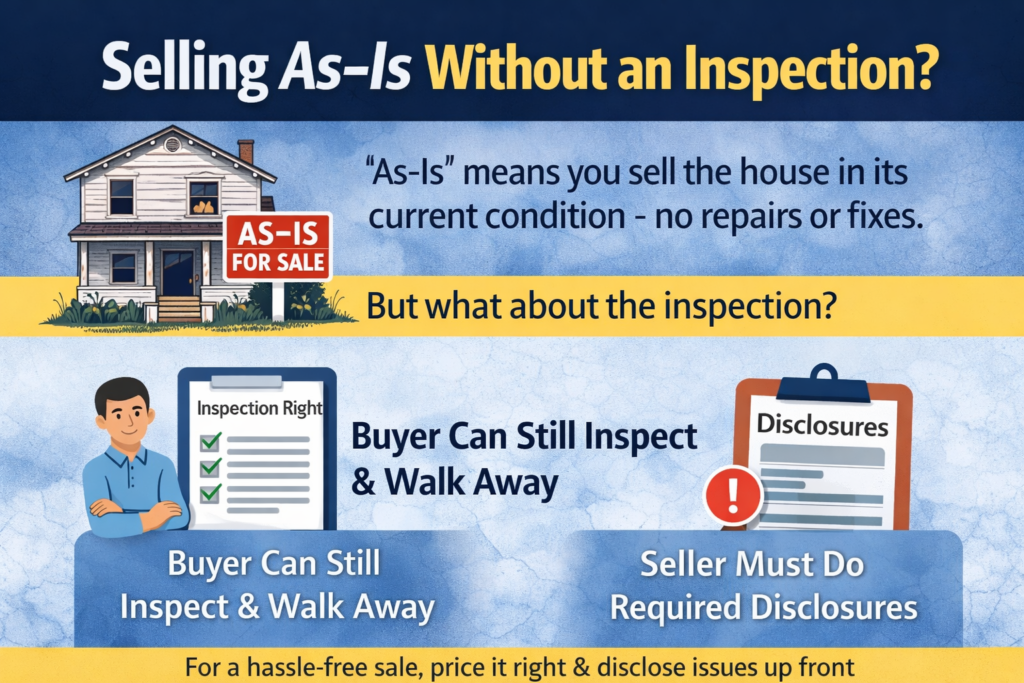
Selling “as-is” doesn’t remove the buyer’s right to investigate. In fact, it makes their own inspection even more important so they can uncover the exact condition of the home they’re agreeing to take on.
The Critical Difference: A Buyer’s Inspection vs. Your Refusal to Repair
A frequent question from sellers is, “If I’m not fixing anything, do I have to accept a buyer’s inspection?” The answer is nearly always yes. Selling “as-is” refers to the condition of the house, not the buyer’s right to investigate that condition. Most buyers, especially those using a mortgage, will want a professional home inspection for their own protection.
This right is usually formalized in the offer through an inspection contingency. Think of this as the buyer’s escape hatch. It’s a clause giving them a set period, typically 7 to 14 days, to inspect the property.
They aren’t building a repair list for you; they’re getting a professional opinion on the home’s true state to decide if they are willing to take it on.
After the inspection, they have two choices: accept the home’s condition and move forward, or use the contingency to walk away without penalty.
A rare few might try negotiating an as-is home sale by asking for a price reduction, but the power remains with you to say no.
The alternative is a home inspection contingency waiver, in which a buyer gives up this right entirely a dream for sellers but a risk for buyers.
The Trade-Offs: Weighing the Pros and Cons of an “As Is” Sale
Selling “as-is” presents a clear trade-off: you swap potential profit for speed and simplicity. It’s a calculated decision where you must weigh what matters more your time and peace of mind, or the highest possible sale price.
This approach significantly narrows your buyer pool. Many traditional buyers are scared off by potential unknowns, leaving you with investors and renovators who expect a discount for the risk they’re taking.
| Pros of Selling “As Is” | Cons of Selling “As Is” |
|---|---|
| Faster Closing (especially with cash buyers) | Lower Final Sale Price (the biggest drawback) |
| No Repair Costs or stressful negotiations | Smaller Pool of Potential Buyers |
| More Predictable Sale (no surprise repair bills) | May Signal Major Issues to buyers |
How to Price Your House to Attract the Right “As Is” Buyers
Setting the right price is the most critical part of an “as-is” sale. You can’t use the prices of updated neighborhood homes as your guide. Your asking price must directly account for the repairs the new owner will have to finance and manage. Overpricing an “as-is” home is the fastest way to ensure it sits on the market without an offer.
This pricing strategy attracts the ideal audience: cash buyers. These are often investors or house flippers looking for a project. Because they don’t rely on traditional bank loans, they can close quickly and are comfortable taking on repairs.
They see the property as an opportunity and are looking for a deal that reflects the work required, making them perfect for someone selling a house as-is for cash.
Your price must be grounded in reality. If nearby renovated homes sell for $300,000 and your house needs a $20,000 roof, an investor won’t offer just $20,000 less. They have to factor in their own time, labor, and profit margin. A realistic price creates a competitive environment that attracts serious buyers.
Your 3-Step Action Plan for a Safe “As Is” Sale
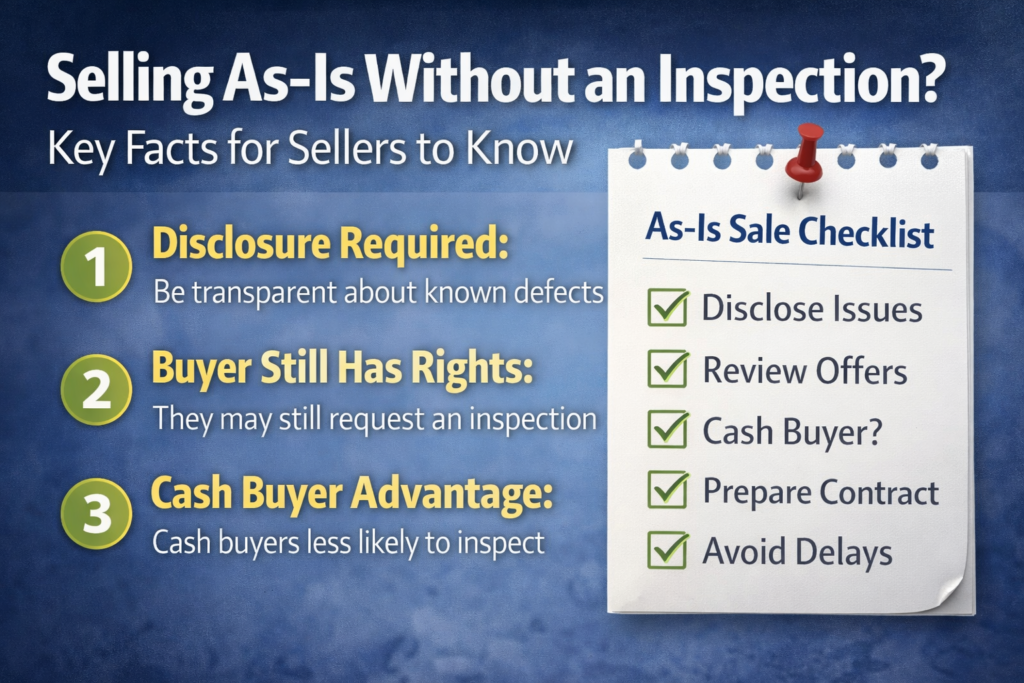
Armed with the knowledge that “as-is” never means “as-is secret,” you can avoid the biggest pitfalls that trap sellers. To proceed safely, here is a simple action plan:
- Create a “Full Disclosure” List: Document every known issue. This is especially crucial when selling a fixer-upper as-is.
- Get a Realistic “As Is” Valuation: Ask a real estate agent for comps of similar “as-is” homes, not renovated properties, to set an effective price.
- Prepare for Investor Offers: Understand that cash offers will be lower but provide the benefit of a faster, more certain closing.
These steps turn your knowledge into a clear plan. For personalized guidance, your best next step is to partner with a local real estate agent with experience in “as-is” sales.