
Mold is one of the most dreaded words in real estate. For homeowners already navigating the stress of selling, discovering mold, or receiving a report flagging its presence, can feel like a door slamming shut on the entire transaction.
Buyers back out. Lenders hesitate. Deals fall apart. And the seller is left wondering whether the house is even sellable.
Here is what many Indiana homeowners don’t know: selling a home with mold in Indiana is entirely possible, and cash buyers do it every day. In fact, mold-damaged properties are among the most active segments of Indiana’s investor and cash buyer market.
The key is understanding how cash buyers evaluate mold-affected homes, what they’re actually looking for during a walkthrough, and how to position your property for a fast, clean sale without spending months managing remediation you may not be able to afford.
This guide covers everything from Indiana’s disclosure requirements to the specific factors local home buyers weigh when making an offer on a mold-damaged property. If you’re sitting on a house with a mold problem and wondering what comes next, you’re in the right place.
Understanding Mold in Indiana Homes
Before getting into the mechanics of selling, it helps to understand what you’re actually dealing with. Mold is a fungal organism that grows wherever moisture, warmth, and organic material converge.
In Indiana’s climate, with its humid summers, cold winters, and significant seasonal precipitation, the conditions for mold growth are common, particularly in:
#1. Basements and crawl spaces: where groundwater intrusion, poor drainage, and condensation create persistent moisture problems
#2. Attics: where inadequate ventilation traps warm, humid air against cold roof decking
#3. Bathrooms and kitchens: where steam, splashing, and inadequate exhaust ventilation allow moisture to accumulate behind walls and under flooring
#5. Around windows and exterior walls: where failed caulking, improper flashing, or aging siding allows water intrusion
#6. Under flooring: particularly after flooding, pipe leaks, or appliance failures that weren’t addressed promptly
Mold ranges from surface-level cosmetic growth, mildew on grout, and minor discoloration on drywall to deeply embedded colonies in structural framing, subfloor, and wall cavities that require extensive demolition and reconstruction to resolve.
The severity of the mold problem in your home will directly influence every aspect of your sale: which buyers will consider it, what offers you’ll receive, and how quickly you can close. Understanding the scope of the problem before approaching any buyer, cash or otherwise, is essential.
Can You Sell a House with Mold in Indiana?
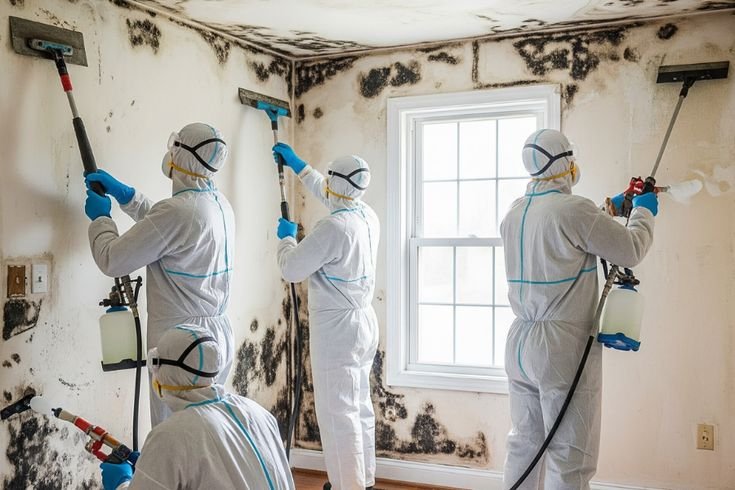
The first question most homeowners ask: Can you sell a house with mold in Indiana? The straightforward answer is yes. Indiana law does not prohibit the sale of a property with existing mold issues. There is no statute requiring sellers to remediate mold before transferring ownership.
However, selling a mold-affected property comes with two important legal realities that shape every aspect of the transaction: disclosure obligations and financing constraints.
Indiana’s Mold Disclosure Requirements
Indiana’s Seller’s Residential Real Estate Sales Disclosure Act requires sellers to disclose known material defects or conditions that could materially affect the property’s value or the buyer’s decision to purchase. Mold that has been identified, reported, or is reasonably visible absolutely qualifies as a material defect.
Mold disclosure when selling a house in Indiana is not optional. If you are aware of mold, whether through a prior inspection report, a remediation company’s assessment, visible growth, or a persistent musty odor that suggests hidden moisture damage, you are legally obligated to disclose it.
Sellers who conceal known mold and proceed with a sale expose themselves to significant post-closing legal liability, including fraud claims and lawsuits seeking repair costs.
The disclosure should include:
#1. The known location and approximate extent of mold growth
#2. Any prior mold testing or inspection reports
#3. Remediation work was previously attempted, either partially or completely.
#4. The underlying moisture source, if identified, and whether it has been addressed
Being thorough and honest in your disclosure is not just a legal obligation; it’s your strongest protection against post-sale disputes. A buyer who purchases with complete knowledge of the mold issue has far less legal standing to pursue claims after closing.
The Mortgage Financing Problem
Even when a seller discloses mold honestly and a buyer accepts the condition, traditional mortgage financing often becomes the obstacle that kills the deal. FHA and VA loan programs- two of the most common financing vehicles for Indiana buyers- have strict property condition requirements.
Visible mold, moisture damage, or a history of significant water intrusion will typically cause a home to fail the appraisal or inspection required for loan approval.
Conventional mortgage lenders face similar issues. When an appraiser notes mold in a report, many lenders will require remediation to be completed and independently verified before they’ll fund the loan.
This means the seller either has to pay for remediation before closing or agree to an escrow holdback, a portion of the sale proceeds held back to fund remediation the buyer completes after closing. Both scenarios add time, uncertainty, and complication to the transaction.
This financing friction is one of the primary reasons cash buyers for moldy homes in Indiana represent such a practical solution. Cash buyers don’t have a lender to satisfy.
They evaluate the property on its own merits, factor the remediation cost into their offer, and proceed without the delays and contingencies that come with traditional financing.
The Indiana Mold Damage Home Sale Market: Who Buys These Properties?
Not every buyer is equipped or willing to take on a mold-affected property. Understanding who buys these homes and why helps you target your sale effectively and set realistic expectations.
Real estate investors are the most active buyers in the Indiana mold-damage home-sale market. These are individuals or companies who purchase distressed properties at below-market prices, complete the necessary repairs and remediation, and either resell the home or add it to a rental portfolio.
They have established relationships with licensed mold remediation companies, understand remediation costs in detail, and are accustomed to evaluating properties that traditional buyers and lenders won’t touch.
House flippers operate similarly, but with a focus on renovation and resale. A mold-affected home can be an attractive flip opportunity if the underlying structure is sound, the location is strong, and the after-repair value justifies the investment in remediation and renovation.
Buy-and-hold investors may be interested in mold-affected properties as future rental assets, provided the remediation cost is manageable, and the property is in a desirable rental market.
What all of these buyers share: they pay cash, they move quickly, and they don’t require the seller to fix anything before closing. This is the core appeal of the cash buyers for moldy homes in the Indiana market for sellers who want a fast, as-is exit.
What Cash Buyers Actually Look For in Mold-Affected Indiana Homes
Understanding how cash buyers evaluate a mold-damaged property gives you a significant advantage in pricing, positioning, and negotiating your sale.
Cash buyers aren’t simply looking at whether mold exists; they’re assessing a comprehensive set of factors that determine the property’s potential value and the risk they’re taking on.
#1. The Source and Status of the Moisture Problem
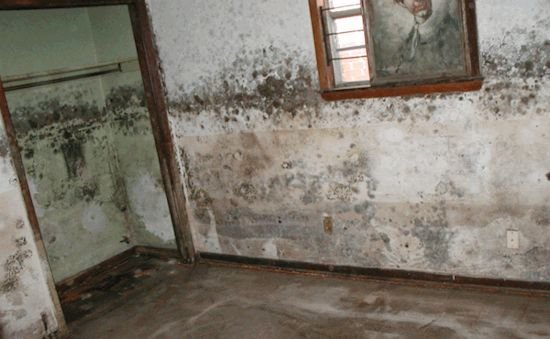
Mold is a symptom. The underlying cause is moisture, and cash buyers care deeply about whether that moisture source has been identified and addressed.
A home where the moisture problem is resolved (the leaking pipe has been fixed, the foundation crack has been sealed, the roof has been replaced) is a far more attractive purchase than one where the moisture source is ongoing and unknown.
If you know what caused the mold in your home and can demonstrate that the source has been addressed, communicate this clearly. It reduces the buyer’s perceived risk and supports a stronger offer.
Active moisture intrusion; ongoing water seepage through a foundation, a roof still allowing water penetration, plumbing with persistent leaks, signals ongoing damage and an uncontrolled remediation scope.
Cash buyers will price this uncertainty in, often more aggressively than the actual remediation cost warrants, because an unknown scope is harder to budget than a known scope.
#2. The Type and Extent of Mold
Not all mold has the same risk profile or remediation cost. Surface mold on non-porous materials like tile, glass, or metal can often be cleaned without demolition.
Mold embedded in drywall, wood framing, subfloor, or insulation typically requires removal and replacement of the affected material.
Cash buyers will want to know and often test for the type of mold present. Certain mold strains, particularly Stachybotrys chartarum (commonly called black mold), pose greater health risks and may require more rigorous remediation protocols.
The presence of black mold can affect both remediation cost estimates and, in some markets, buyer appetite.
The extent of mold growth matters just as much as the type. A single contained area of mold growth in a basement corner is a very different proposition than mold that has spread through wall cavities across multiple rooms.
Cash buyers will assess whether the mold is contained or widespread, and their offer will reflect that distinction.
#3. Structural Integrity
Prolonged moisture exposure and mold growth can compromise structural components, particularly wood framing, subfloor decking, and rim joists in basements and crawl spaces. Cash buyers evaluating a mold-affected property will assess whether the structural elements remain sound or whether remediation will require replacing compromised framing.
A home where mold is present but the structural integrity is intact is a cleaner, more predictable project. A home where mold has penetrated load-bearing elements introduces significantly more cost and complexity — and buyers will price that risk accordingly.
#4. Prior Remediation History
Has the mold been addressed before, either partially or fully? Cash buyers look carefully at prior remediation work. Properly documented, professionally completed remediation that resolved the problem and its source is a positive signal.
Poorly executed DIY remediation that masked visible mold without addressing the underlying moisture source is a red flag, suggesting the problem may be more extensive than it appears and that there may be undisclosed additional damage.
If your home has any prior remediation history, gather all documentation, such as company reports, clearance test results, and contractor invoices, and have it ready. Transparency here builds trust and strengthens the negotiating position.
#5. Overall Property Condition and Location
Cash buyers evaluate mold-affected homes within the context of the broader property. A home with mold in an otherwise solid structure in a desirable Indiana location represents a different investment than a mold-affected home with a failing roof, an outdated electrical system, and deferred maintenance throughout.
Location matters for the same reasons it always does in real estate: the after-repair value is the ceiling that determines how much any buyer, cash or otherwise, can pay and still make the numbers work.
A mold-damaged home in a strong Indianapolis suburban market may still generate competitive cash offers because the ARV supports it. A similar property in a weak market with limited resale demand will attract more cautious offers.
How to Sell Your House As-Is with Mold in Indiana
For many homeowners in Indiana, selling a house as-is with mold to a cash buyer is the most practical path forward. Here is how to navigate the process effectively.
Step 1: Get a Mold Inspection
Before approaching any buyer, invest in a professional mold inspection and testing. A licensed mold inspector will identify the location, type, and approximate extent of mold growth, assess moisture readings throughout the property, and provide a written report.
This report serves two purposes: it satisfies your disclosure obligations by giving you documented knowledge of the mold issue, and it gives cash buyers the information they need to make confident offers.
A property with a professional mold report is easier to sell than one where the extent of the problem is unknown because buyers factor uncertainty into their offers, often more conservatively than the facts warrant.

Step 2: Understand the Remediation Cost Range
You don’t have to pay for remediation, but knowing what it costs positions you to negotiate from knowledge rather than guessing. Contact one or two licensed mold remediation companies in Indiana and ask for ballpark estimates based on the inspection report.
These estimates give you a benchmark for evaluating cash offers and ensure you’re not accepting a price that significantly undervalues the property, even accounting for the mold problem.
Step 3: Prepare Your Disclosures
Using Indiana’s standard Seller’s Residential Real Estate Sales Disclosure form, document all known information about the mold location, extent, moisture source, prior remediation history, and the findings of your professional inspection. Attach copies of any inspection reports, remediation records, or moisture assessments.
Complete, accurate mold disclosure when selling a house in Indiana protects you legally and signals to cash buyers that you’re conducting a transparent, professional transaction.
Investors and cash buyers deal with distressed properties constantly; they respect sellers who are upfront far more than those who obscure or minimize known issues.
Step 4: Contact Cash Buyers and Request Offers
Reach out to multiple cash buyers or real estate investment companies operating in your Indiana area. Provide them with the property address, the mold inspection report, your disclosure documentation, and any additional information about the property’s condition.
A reputable cash buyer will schedule a walkthrough, review your documentation, and present a written offer — typically within 24 to 72 hours. Requesting offers from multiple buyers gives you leverage and ensures you’re getting a competitive price for the property’s condition.
Step 5: Evaluate Offers and Close
When reviewing offers, look beyond the headline number. Consider the closing timeline (can they accommodate your schedule?), any contingencies attached, and the buyer’s track record and reputation. A legitimate cash buyer will provide a clean, written offer with a clear process and no upfront fees.
Once you accept an offer, closings for cash sales in Indiana typically take one to two weeks, sometimes less. This is the essence of a fast home sale for mold problems in Indiana: no lender approvals, no appraisals, no lengthy inspection negotiations, no financing contingencies.
What to Expect on Pricing
Selling a house as-is with mold in Indiana means accepting a price below the property’s fully remediated market value. Understanding how cash buyers calculate their offers helps you evaluate what you receive with confidence.
The standard investor framework is:
After Repair Value (ARV) − Remediation and Repair Costs − Holding Costs − Profit Margin = Cash Offer
As a practical example: if your home would sell for $175,000 fully remediated, the mold remediation and related repairs are estimated at $35,000, holding and transaction costs account for approximately $15,000, and the buyer requires a $20,000 return, expect offers in the range of $100,000 to $110,000.
The discount reflects the cost and risk the buyer is taking on, not an arbitrary lowball. Understanding this math helps you evaluate whether an offer is reasonable and whether approaching multiple buyers might generate more competitive pricing.
Frequently Asked Questions
Can I legally sell a house with mold in Indiana?
Yes. Indiana law does not prohibit the sale of mold-affected properties. You must disclose all known mold issues to prospective buyers, but remediation before selling is not legally required.
Do I have to disclose mold when selling my house in Indiana?
Yes. Known mold is a material defect under Indiana’s disclosure laws and must be disclosed. Concealing known mold exposes the seller to serious post-closing legal liability.
Will traditional buyers be able to get financing on a mold-affected home?
Often not. FHA, VA, and conventional lenders frequently require mold remediation to be completed before they’ll approve financing, which limits your buyer pool for traditional listings.
How fast can I sell a mold-damaged house in Indiana?
With a cash buyer, closings can occur in as little as seven to fourteen days. There are no financing delays, no appraisal contingencies, and no lender-imposed conditions to satisfy.
How much less will I receive for a mold-affected home?
It depends on the severity and extent of the mold damage. Minor containable mold may result in a modest price reduction. Extensive mold with structural involvement or an unresolved moisture source can reduce offers by 20–40% or more relative to the fully remediated comparable value.
What if I can’t afford a mold inspection before selling?
Some cash buyers will conduct their own assessment at no cost to the seller. However, having an independent inspection strengthens your legal position and ensures you understand the full scope of what you’re disclosing.
Can a house sold as-is in Indiana still get listed with mold problems?
Yes, a house sold as-is in Indiana can still be listed even if it has mold problems. Selling “as-is” simply means the seller does not plan to make repairs before closing. However, Indiana sellers are still expected to disclose known issues, including mold, water damage, or conditions that may affect the home’s value or safety.
Final Thoughts
A mold problem doesn’t have to mean the end of your sale. Selling a home with mold in Indiana is a realistic option, particularly when you understand the cash buyer market and how these investors evaluate mold-affected properties.
The path forward is straightforward: get a professional inspection, document everything, complete your disclosures honestly, and connect with experienced cash buyers in Indiana who understand the market and can move quickly.
You don’t have to spend tens of thousands of dollars on remediation you can’t afford, wait months for a traditional buyer whose lender backs out, or feel stuck in a property that’s become a financial burden.
A fast home sale for mold problems in Indiana is entirely within reach. With the right preparation and the right buyer, you can close quickly, move on cleanly, and put the mold and the stress that came with it firmly behind you.